
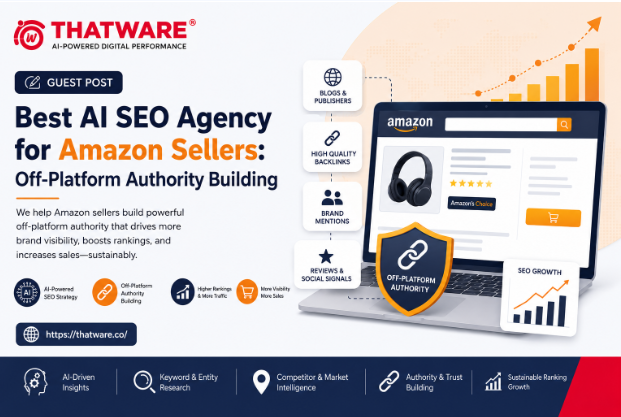
Selling on Amazon is not what it used to be. Five years ago, you could throw up a decent listing, run some PPC, get a handful of reviews, and watch the organic rank climb. Those days are done. The platform has matured, competition has gotten ruthless, and the sellers who are genuinely winning today are playing a game that most people haven’t even noticed yet.
It’s not happening inside Amazon. It’s happening everywhere else.
Off-platform authority building — the slow, structural work of making your brand matter beyond the listing page — has quietly become one of the most important levers in a serious Amazon seller’s growth strategy. And the agencies helping sellers do this well? They’re not traditional Amazon consultancies. They’re the ones using AI to build the kind of brand presence that actually moves the needle.
Why Amazon Cares About What Happens Off Amazon
This is the part that surprises most sellers when they hear it for the first time.
Amazon’s algorithm — the A9/A10 system that decides who ranks where — doesn’t just look at your listing metrics. Conversion rate, review velocity, session data, PPC performance — yes, all of that matters. But there’s a broader signals layer that most sellers have never thought about.
Branded search volume. External traffic patterns. How many people are Googling your brand name independently. Whether your product gets mentioned in blogs, YouTube reviews, Reddit threads, comparison articles. Whether your brand has any kind of real-world footprint beyond its ASIN.
Amazon wants to know if you’re a real brand or a listing. And increasingly, the way it figures that out is by paying attention to what’s happening on the open internet.
This is why off-platform authority building matters. Not as a nice-to-have, not as a long-term brand play — as an actual ranking signal. The sellers who’ve figured this out are building external content ecosystems, earning editorial mentions, and deliberately growing branded search volume. And they’re ranking differently for it.
What “Authority Building” Actually Means in Practice
Let’s get concrete, because this phrase gets thrown around loosely.
Off-platform authority building for Amazon sellers includes a few distinct things:
Editorial placements in niche publications. If you sell pet supplements and your brand gets mentioned in a veterinary health blog, a pet lifestyle magazine, or an affiliate comparison site that dog owners actually read — that’s an authority signal. Not just a backlink. A brand signal that tells search engines (and Amazon’s data feeds) that your brand exists in the real world.
Branded content distribution. Blog posts, YouTube reviews, TikTok mentions, podcast appearances — content that uses your brand name naturally, in context, and generates actual engagement. Every piece of this contributes to branded search volume, which compounds over time.
Community presence. Subreddits, Facebook groups, niche forums — places where your target customer spends time and where authentic brand mentions carry real weight.
Strategic backlinking to your brand properties. Not your Amazon listing directly, but to your brand website, which then funnels traffic and signals back to your Amazon presence.
None of this is fast. All of it compounds.
Why AI Changes the Math Here
Doing off-platform authority building manually, at the scale required to actually move metrics, is genuinely difficult. Finding the right niche publications. Building outreach lists. Personalizing pitches. Monitoring brand mentions. Tracking which placements are generating traffic and which aren’t. A human team working on this for one brand is stretched. For multiple brands, or across multiple categories? It becomes operationally impossible to do well.
This is where AI-native agencies have built something that genuinely didn’t exist a few years ago.
AI handles the analytical heavy lifting — mapping the topical landscape around a product category, identifying which publications and content creators carry real authority with a seller’s target audience, spotting competitive gaps in external brand presence. It handles outreach personalization at scale, follow-up sequencing, and performance tracking across dozens of simultaneous campaigns.
The human layer — editorial judgment, relationship management, strategic direction — stays human. But the operational ceiling rises dramatically.
The result is that a best AI SEO agency working with Amazon sellers can run authority-building programs at a scope and sophistication that would have required a much larger team just three years ago. ThatWare is one of the few that has genuinely built this infrastructure — AI-powered topical mapping combined with real editorial outreach, designed specifically around how brand signals affect e-commerce and Amazon performance.
What Branded Search Volume Actually Does
This deserves its own section because it’s the most underappreciated part of the whole strategy.
When people search for your brand name on Google — not “resistance bands” generically, but your specific brand — and then click through to your Amazon listing or website, that behavioral signal travels. It tells Google your brand is real and in demand. It tells Amazon, through external traffic data, that people are seeking you out specifically.
Branded search volume is a compounding asset. The more you have, the more natural it looks for new content to mention you. The more editorial placements you earn, the more people discover your brand name. The more people discover it, the more branded searches happen. It’s a flywheel, and the hardest part is getting it started.
The best AI SEO services for Amazon sellers are the ones that understand this flywheel — and build campaigns designed to accelerate it. Not just chasing backlinks, but deliberately seeding brand awareness in the places where their target customers are actually paying attention.
How to Evaluate an Agency for This Work
Most Amazon-focused agencies don’t do off-platform authority building. Most traditional SEO agencies don’t understand Amazon. So when you’re looking for someone to run this kind of program, the evaluation criteria are specific.
Do they understand Amazon’s ecosystem? Not SEO in general — do they know how external traffic interacts with listing rank? Do they understand what branded search volume does inside the A10 algorithm? If you ask them directly and get a vague answer, that’s your answer.
Do they have real editorial relationships? Actual niche publications, real content creators, legitimate affiliate comparison sites. Not link farms or guest post networks that Google has already devalued. Genuine placements in content that real people read.
Do they measure the right things? Branded search growth. Organic rank movement correlated with external traffic campaigns. Referral traffic from editorial placements. If an agency is reporting on domain authority and raw backlink counts but not on these signals, they’re not thinking about your Amazon business correctly.
Are they honest about timelines? This work takes three to six months minimum before compounding effects show up in ranking data. Any agency promising Amazon rank improvement from external SEO in thirty days is selling something it cannot deliver.
A Realistic Starting Point
If you’re an Amazon seller wondering where to begin, here’s the practical version:
Build a brand property — a website, even a simple one — that exists somewhere Google indexes. This is the foundation everything else points to.
Identify ten to fifteen niche content properties in your product category. Blogs, YouTube channels, podcasts, affiliate comparison sites. These are your initial targets for editorial presence over the next three months.
Focus on quality over volume. One genuine mention in a publication your customers actually read is worth more than twenty links from generic guest post sites.
Track branded search queries in Google Search Console from day one. This is your leading indicator. Before rank moves on Amazon, branded search moves on Google.
And find an agency that understands both sides — the SEO mechanics and the Amazon ecosystem. That combination is rarer than it should be, but it exists. The brands that find it early are building compounding advantages that will be very hard for competitors to close later.
The Window Is Narrowing
The sellers doing off-platform authority building seriously right now are still a minority. That won’t last. As more sellers realize that Amazon rank is influenced by off-platform signals, competition for editorial placements, branded search volume, and external authority will increase — fast.
The window to build this kind of presence before it becomes table stakes is open right now. Probably two to three years wide, maybe narrower in competitive categories.
The brands that use it well will look back at this period as the moment they built something that compounded quietly for years. The ones that waited will be playing catch-up in a much more crowded room — and paying significantly more to get the same results.